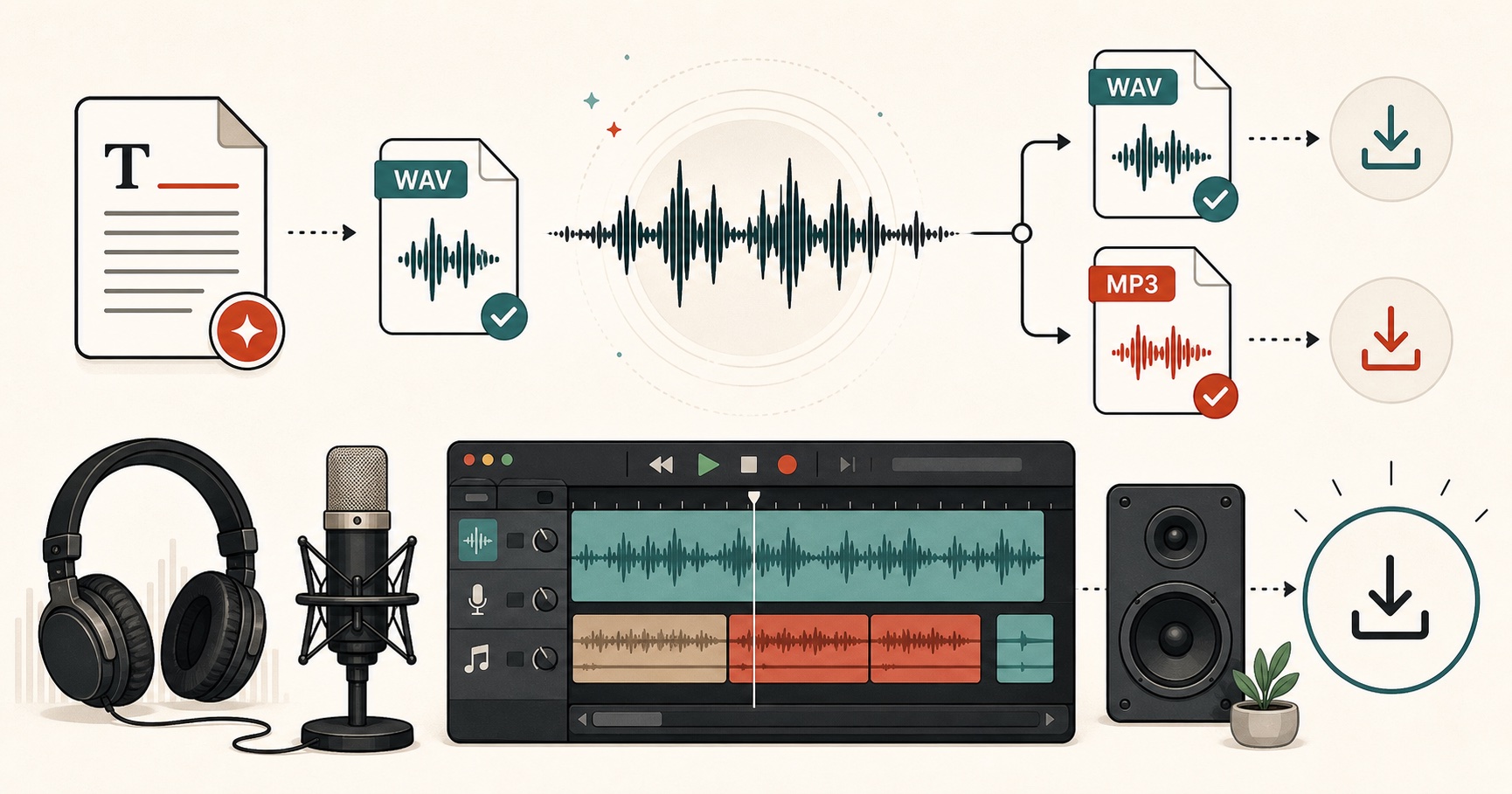
Spanish text to speech turns your written Spanish into a real, spoken voice. You paste your text, choose a voice, and download clean audio in seconds. No signup, no fees.
This guide shows you how to do it free. You will also learn how Spanish accents differ, get tips for natural voiceovers, and see the best ways creators use it. You can convert Spanish text to speech here and try it as you read.
The tool handles Spanish accents and special characters, and works with 8 other languages too. The audio is yours to keep, even for commercial work like YouTube videos, reels, and ads.
What is Spanish text to speech?
Spanish text to speech is a tool that reads Spanish writing out loud in a natural voice. You give it text, and it gives you back audio. Some people call it a Spanish voice generator, or texto a voz in Spanish.
Modern AI voices sound close to a real person, so the audio feels spoken, not robotic. The tool reads accent marks and special letters like á, é, í, ó, ú, ñ, and ü, so your words come out right. You can use it to add a voiceover, listen to notes, or help someone who finds reading hard.
How to convert Spanish text to speech free
Here is how to turn Spanish text into audio in under a minute. Open the free text to speech tool and follow these steps.
Paste your Spanish text into the box. You can add up to 5,000 characters, and long pieces get handled in chunks.
Pick a Spanish voice from the list. Choose male or female, and hit preview to hear it first.
Set the speed to match your video or your own pace. Slower for clarity, faster for short clips.
Hit Generate and wait a few seconds. Your Spanish voiceover is ready.
Download the WAV file and use it anywhere, including commercial work.
That is the whole process. No account, no payment, and no watermark on the audio.
Castilian vs Latin American Spanish
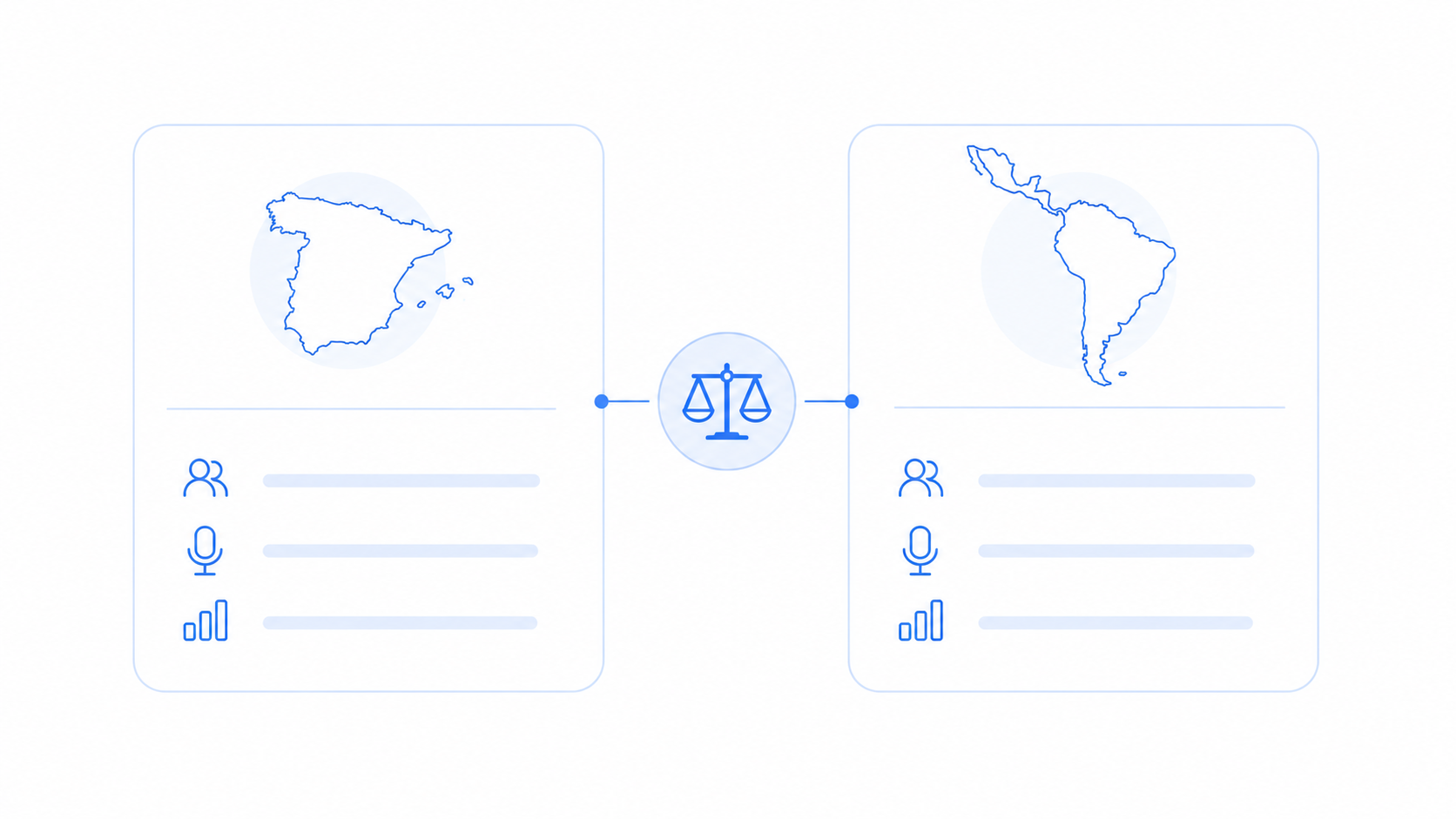
Spanish is not one single accent. The biggest split is between Castilian Spanish, spoken in Spain, and Latin American Spanish, spoken across Mexico, Argentina, Colombia, and more. Picking the right one makes your audio feel local instead of generic.
The clearest difference is the "c" and "z" sound. In Castilian Spanish, "gracias" sounds closer to "grathias". In most of Latin America, it sounds like "grasias". There are also small word choices, like "vosotros" in Spain versus "ustedes" in Latin America.
So which should you pick? The three Spanish voices are general purpose and are not labeled by region, so they are not split into separate Castilian and Latin American options. Preview each one with a line of your own text and pick the voice that fits your audience best.
Tips for natural-sounding Spanish voiceovers
A few small habits make Spanish audio sound much more natural. Keeping the accent marks matters more than it looks, because they change the stress and sometimes the meaning. For example, "papá" (dad) and "papa" (potato) are read differently, so type the marks correctly.
The inverted ¿ and ¡ help the voice get the tone right. Open questions with ¿ and exclamations with ¡, and the voice will lift and drop the way a real speaker would.
Punctuation sets your pauses. A comma is a short breath and a full stop is a longer one. Add them where you would pause in real speech, and the voiceover will not feel rushed.
Tricky numbers are safer spelled out. If a number reads wrong, write it in words. For example, "2025" can become "dos mil veinticinco" so it is spoken the way you want.
A quick preview saves time. Listen to a short sample first, and if a word sounds off, fix the accent mark or add a comma, then generate again.
Best uses for Spanish TTS
Spanish text to speech fits a lot of everyday work. Here are the most common ways people use it.
YouTube and faceless channels run on it. Many Spanish creators narrate videos without recording their own voice. You can add a Spanish voiceover for YouTube videos in minutes.
Reels and Shorts need quick audio. A short script becomes a clean voiceover that you drop straight into your edit.
E-learning and courses sound clearer with a steady voice. Teachers turn lessons into Spanish audio that students can replay at their own pace.
Language practice gets easier when you can hear the words. Spanish learners paste a sentence and listen to the correct pronunciation as many times as they need.
Accessibility matters too. People who find reading hard can listen to articles, messages, or books in Spanish instead.
Choosing the right Spanish voice
The tool gives you three Spanish voices, so try a few before you settle. Dora is warm and expressive for conversational content and storytelling, Alex is clear and natural for lessons and presentations, and Santa is cheerful for seasonal and family clips.
Set the speed to match your project, then preview each on the Spanish voices page and pick the one that fits.
The bottom line
Spanish text to speech makes it easy to turn writing into a clear, natural voice. Paste your text, pick a Spanish voice, and you have audio ready for videos, courses, or accessibility. Keep your accent marks, add the inverted ¿ and ¡, and preview once, and your Spanish voiceover will sound just right.