Short answer: using a synthetic AI voice in paid work is generally legal as long as the tool's licence allows it, and FreeTextoSpeech allows commercial use with no attribution. The real legal risk is cloning a specific person's voice without their consent, not using a synthetic voice. This is general information, not legal advice.
I run FreeTextoSpeech, so this is the question that lands in my inbox more than any other: "Am I allowed to make money with this?" And almost everyone who asks is worried about the wrong thing. They picture using any AI voice in a paid video as some legal grey zone, when the everyday case is actually settled and boring. The part that carries real risk is narrow. It is copying a real, identifiable person's voice. So here is a plain map of what matters, written from the side of someone who built the tool and reads these terms for a living.
Start with the licence, not the law
The first question is not what the law says. It is what the tool's terms let you do. A synthetic voice you generate is fine to use commercially if the provider gives you those rights, and that licence is a contract between you and the tool. It usually answers the question before any wider law even comes up. Before you build anything on top of a tool, check three things:
- Commercial use is spelled out, not just personal use. A "personal use only" clause means you cannot sell the audio or drop it into a monetised video.
- Attribution is required or it is not, and in what form. Some free tools want a credit line. Others do not.
- Restrictions on resale, redistribution, or specific industries. A tool might allow commercial use but still ban you from reselling the raw audio as a stock library.
FreeTextoSpeech allows commercial use on the free tier with no attribution, which covers most of what creators and small businesses actually do. A YouTube voiceover, a client explainer, a paid audiobook, an advert, all of it can use the audio without a credit line. One habit I'd push on anyone: keep a dated copy of the terms, a saved page or even a screenshot. Terms change over time, and if a dispute ever comes up you want proof of what the licence said on the day you generated the file. It takes ten seconds and I've seen people wish they'd done it.
The one distinction that decides everything: synthetic vs cloned
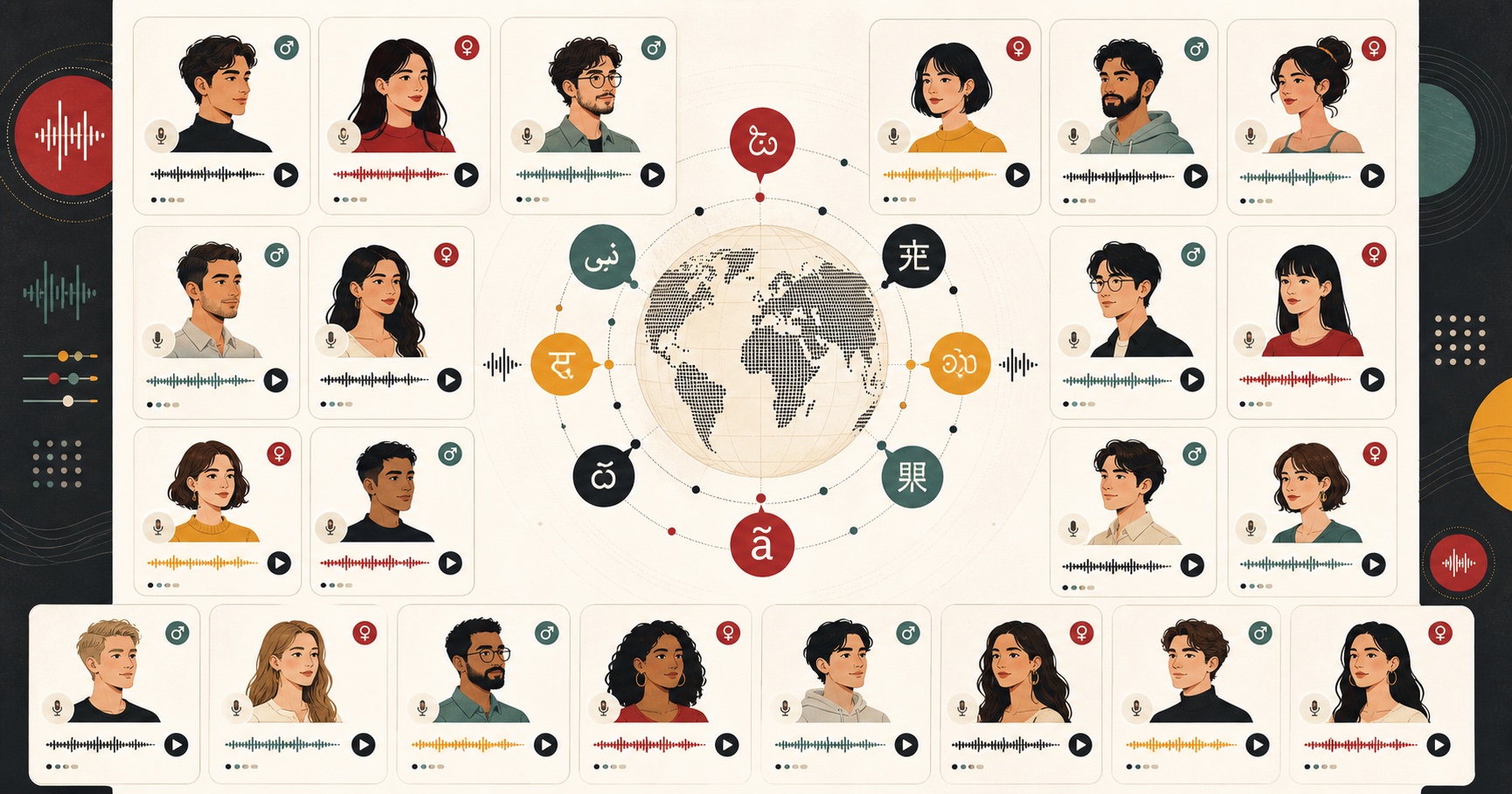
Honestly, if you remember one thing from this article, make it this. A synthetic voice is generated by a model and does not belong to any specific real person. It is not a copy of anyone you could point to. When you type text into FreeTextoSpeech and pick a voice like Heart, Adam, Emma, or the Hindi voice Alpha, the tool builds that audio from the open Kokoro model. No living person can claim it is a recording of them. A cloned voice is a different animal. It reproduces an identifiable person's actual voice from recordings of them. Nearly all of the legal risk lives in that second category.
Standard text to speech gives you synthetic voices, which means you skip the hardest legal questions completely. There is no real person whose voice or likeness rights you could be stepping on, because the output is a model result and not a scan of someone's identity. If you want the longer version of this, I wrote it up in text to speech vs voice cloning. But the short version is this: stay in the synthetic lane and most of the scary headlines just do not apply to you.
For reference, our free text to speech tool allows commercial use with no attribution.
The EU AI Act and disclosure
The EU AI Act adds transparency rules around AI-generated content, with some of those rules phasing in through 2026. For a creator or a business, the practical version is simple. Where your audience or your platform expects it, say that the voice is AI-generated. This is not a burden. One line does it.
Good places to put that line:
- Video description - something like "Narration generated with AI text to speech."
- Show notes - a single sentence in a podcast episode's notes covers it.
- Credits - an on-screen or end-of-video credit works for adverts and explainers.
- Product pages - if the audio ships inside an app or a course, a footnote is enough.
Being upfront about it is quickly becoming the normal thing to do, and audiences increasingly expect it anyway. If you publish to people in the EU, I'd just make disclosure your default instead of deciding case by case. It costs you nothing and it removes a whole category of future complaints before they start.
The ELVIS Act and voice rights
In the United States, Tennessee's ELVIS Act protects people from having their real voice cloned by AI without consent, and other places are moving the same way. The law goes after the unauthorised reproduction of an identifiable person's voice, which is exactly the risk that synthetic text to speech avoids. Similar name, image, and likeness protections exist in other states and countries, and the direction of travel is toward stronger voice rights, not weaker ones.
The rule I'd give anyone is short: never clone a real person's voice without clear written permission. That covers celebrities, public figures, a former employee, or a customer who once recorded a testimonial for you. A synthetic voice from a tool like FreeTextoSpeech steps around this completely, because it is not built from anyone's recordings and it does not imitate a named individual.
A worked example: a monetised YouTube channel
Say you run a faceless YouTube channel reviewing budget gadgets, and you make money from ad revenue plus affiliate links. You want an AI voice for every video. Here is how the legal picture actually plays out, step by step.
- Pick a synthetic voice. You open FreeTextoSpeech, paste your script, and choose a US voice like Michael or Nova. No real person's voice is in the mix, so voice-rights law does not touch you.
- Confirm the licence. The free tier allows commercial use with no attribution, so your ad and affiliate income is fine. You save a copy of the terms.
- Add a disclosure. You put one line in the description noting the voice is AI-generated, which keeps you in line with platform and EU expectations.
- Export and publish. You download the audio and drop it into your editor.
That whole flow is low-risk. The only way you'd create a problem is by cloning a specific person or claiming a real individual said your script. Avoid that, and a monetised channel running on synthetic voices is just a normal channel.
Common mistakes to avoid
Most of the trouble I see does not come from using AI voices at all. It comes from a handful of avoidable errors:
- Cloning a celebrity "just for fun" - even an unpaid parody can breach voice-rights law if the voice is an identifiable copy. Fun is not a defence.
- Assuming a personal-use tool covers commercial work - read the licence tier, not the marketing on the homepage.
- Skipping disclosure on EU-facing content - the fix is one sentence, so there is no good reason to skip it.
- Implying a real person endorsed you - a synthetic voice scripted to sound like a named expert can still mislead, even though it is not a clone.
- Losing the terms you agreed to - if you cannot show what the licence said, you cannot prove you were allowed to use the audio.
A simple compliance checklist
- Use a tool whose licence allows commercial use, and keep a dated copy of the terms.
- Prefer synthetic voices over cloning a real person.
- Disclose the AI voice where your platform, audience, or region expects it.
- Never clone an identifiable voice, a celebrity's included, without written consent.
- Do not script a synthetic voice to impersonate a specific named person.
- For high-stakes or regulated work, confirm the current rules and get proper legal advice.
Quick answers to common questions
Can I use an AI voice in a paid advert? Yes, if the licence allows commercial use and the voice is synthetic. Add a disclosure where it is expected.
Do I have to credit the tool? Not with FreeTextoSpeech on the free tier, since no attribution is required. Other tools may differ, so check theirs.
Is it legal to sell an audiobook narrated by AI? Yes, using a synthetic voice under a commercial licence. Some storefronts have their own disclosure rules, so read the platform's policy too.
What about a voice that "sounds like" a famous actor? Risky. If listeners would recognise it as that person, you are in cloning territory even without a direct recording. Stick with clearly synthetic voices.
Does the file format matter legally? No. FreeTextoSpeech downloads MP3 by default, or WAV (24 kHz) if you pick it in the format menu, and you can convert either to another format for delivery. The format has nothing to do with your rights to use the audio.
What this means in practice for creators
For the everyday cases, and I mean YouTube voiceovers, TikToks, explainers, audiobooks, client work, using a synthetic voice from a tool that permits commercial use is low-risk and completely normal. You are not sitting in some legal grey zone. You are doing the same thing thousands of channels and businesses already do every day. The situations that call for real caution are narrow: cloning a specific person, or implying a real individual said something they never said. Stay in the synthetic-voice lane, disclose where it is expected, and keep your terms on file. Do that and you are on solid ground.
Try it
For commercial-safe synthetic voices, open FreeTextoSpeech, generate your audio, and use it on monetised and client projects without second-guessing it. It is free, needs no signup for basic use, and allows commercial use with no attribution. For anything high-stakes or heavily regulated, confirm the current terms and, where it matters, get advice from a qualified professional. This article is general information, not legal advice.